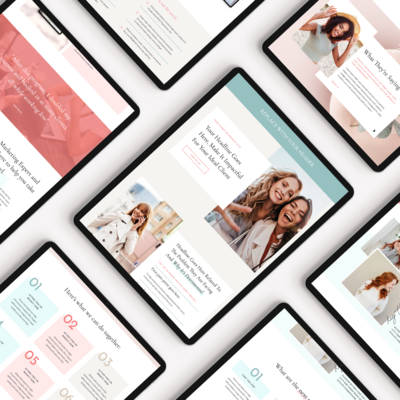
Most websites look fine. Clean layout, decent photos, a contact page somewhere. But looking fine and actually working are two different things — and a lot of service-based businesses have one without the other.
Strategic website design isn’t about trends or aesthetics. It’s about building a site that communicates clearly, earns trust quickly, and guides visitors toward a specific action. When those things are working together, your website becomes one of the most consistent lead-generation tools in your business. When they’re not, it’s just a pretty placeholder.
Here are the five components that separate a strategic website from one that just exists.
1. A Clear, Specific Tagline Above the Fold
The first thing someone sees when they land on your homepage determines whether they stay or leave. And most people decide within a few seconds — not minutes.
Your tagline (sometimes called a hero statement or headline) needs to do one thing well: tell someone immediately what you do and who you do it for. Not in industry jargon, not in abstract brand-speak, but in plain language that your ideal client would actually use.
The most effective taglines follow a simple structure: what you do + who you help + the outcome they get. For example:
- “Website templates for women consultants who are ready to look as established as they are.”
- “Brand strategy for service providers who want to attract better clients without working more hours.”
- “Family photography for parents who want to remember what this season actually felt like.”
None of those are complicated. They’re just clear. And clarity is what keeps someone reading.
If your current tagline is vague, clever, or more about you than about your client — that’s the first thing to fix. A strong tagline paired with a direct call to action is the foundation every other component builds on.
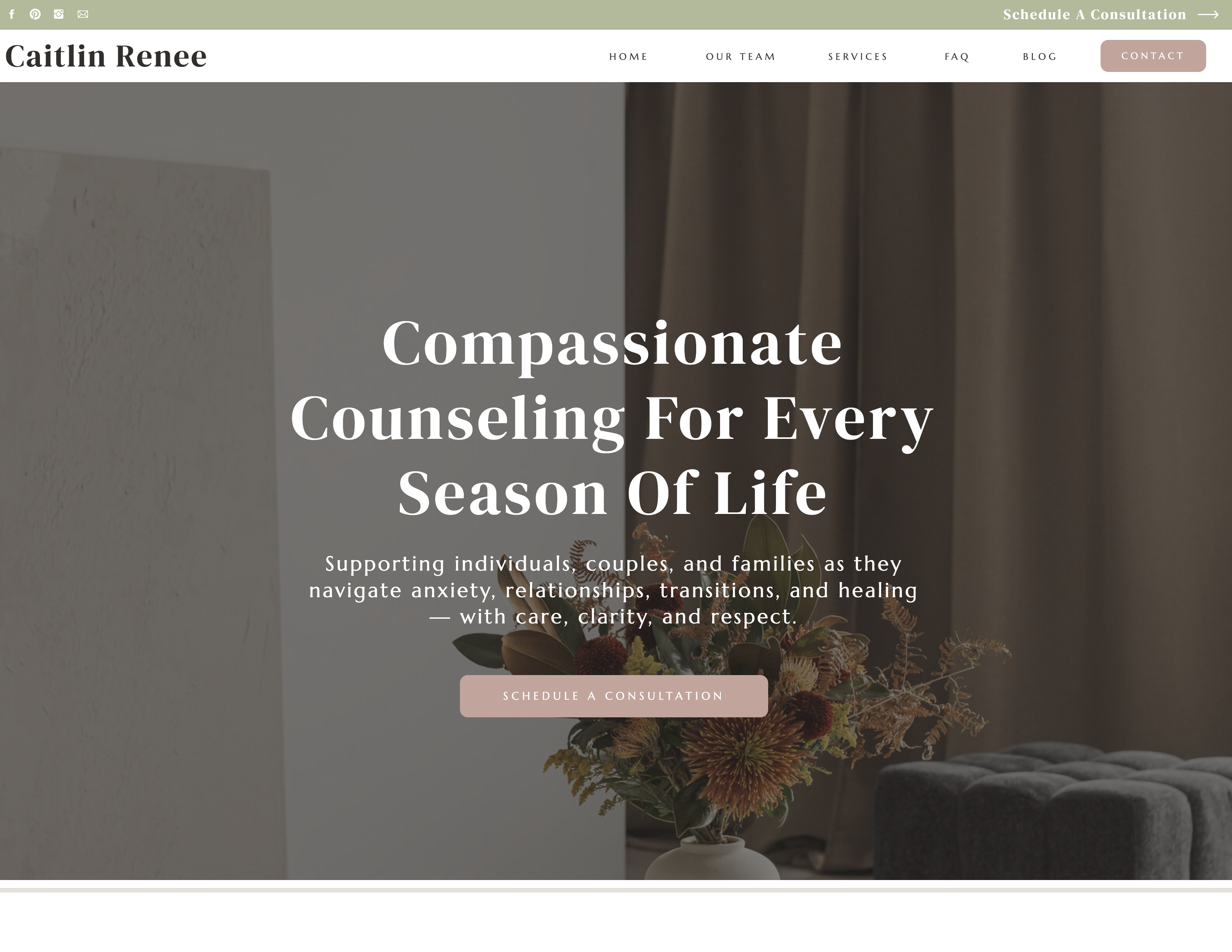
2. A Call to Action That’s Impossible to Miss
Your visitors should never have to wonder what to do next. At every major point in their journey through your site — the homepage hero, the bottom of your about page, the end of your services page — there should be a clear, confident next step waiting for them.
A lot of business owners bury their calls to action out of fear of seeming pushy. But think about it from your visitor’s perspective: if they’ve read your about page and liked what they saw, they want to know what to do next. Making them search for it doesn’t feel polite — it feels frustrating.
Good calls to action are specific and action-oriented. “Book a consult,” “browse templates,” “get started” — these are all stronger than “learn more” or “click here.” The language should match what you’re actually asking someone to do, and it should feel like the natural next step, not a sales push.
In a well-designed strategic website, CTAs appear in the navigation, in the hero section, mid-page where it makes sense, and in the footer. That’s not overkill — that’s meeting your visitor wherever they are when they’re ready to move.
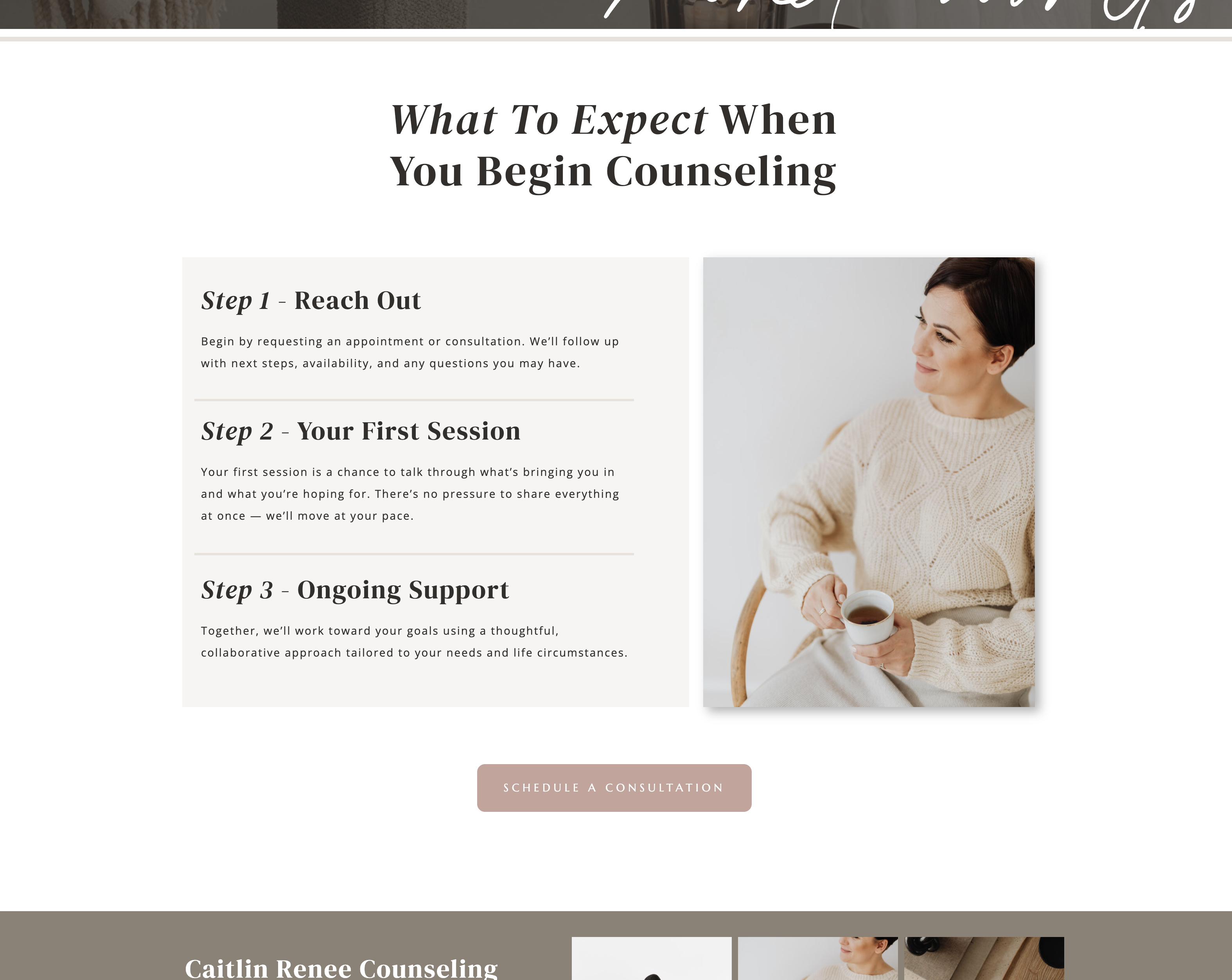
3. Social Proof That Speaks to Results
Testimonials are one of the most powerful tools on a website, and one of the most consistently underused. Most people either skip them entirely, bury them on a separate page, or feature quotes that talk about how wonderful the experience was — without saying anything about what actually changed.
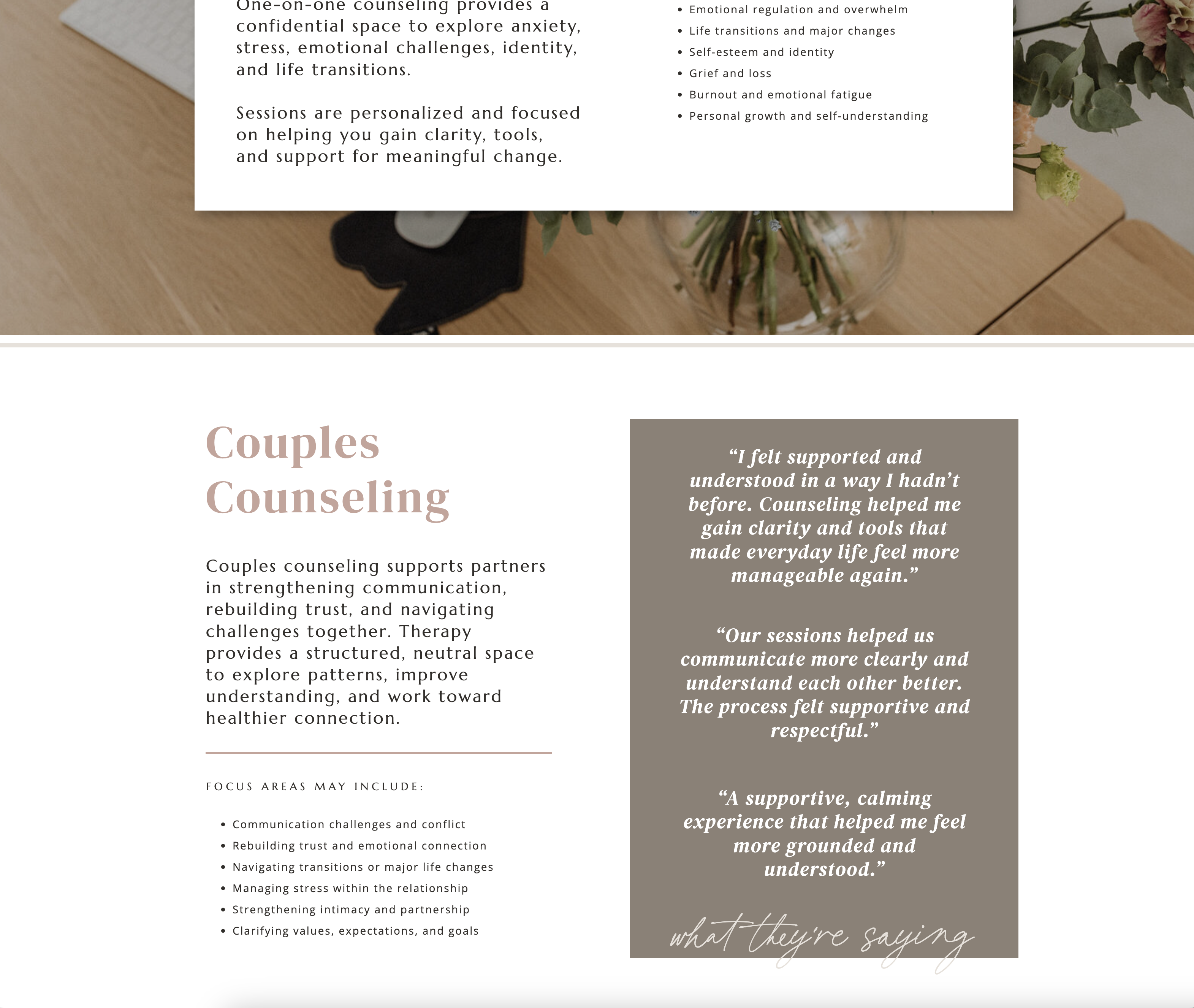
The testimonials that convert are the ones that speak to outcomes. Not “working with Jessica was such a pleasure” but “within a week of launching my new site I booked two inquiries from clients I’d never have reached before.” The first tells someone you’re nice to work with. The second tells them you get results.
When you’re selecting or requesting testimonials, look for ones that describe a before and after. What was the problem? What changed? What’s different now? That’s the story your potential clients need to hear — because they’re imagining themselves in it.
Place your best testimonials strategically throughout your site, not just on a dedicated reviews page. A strong quote on your homepage, another on your services page, and one near your contact form does more work than ten testimonials grouped together on a page nobody visits.
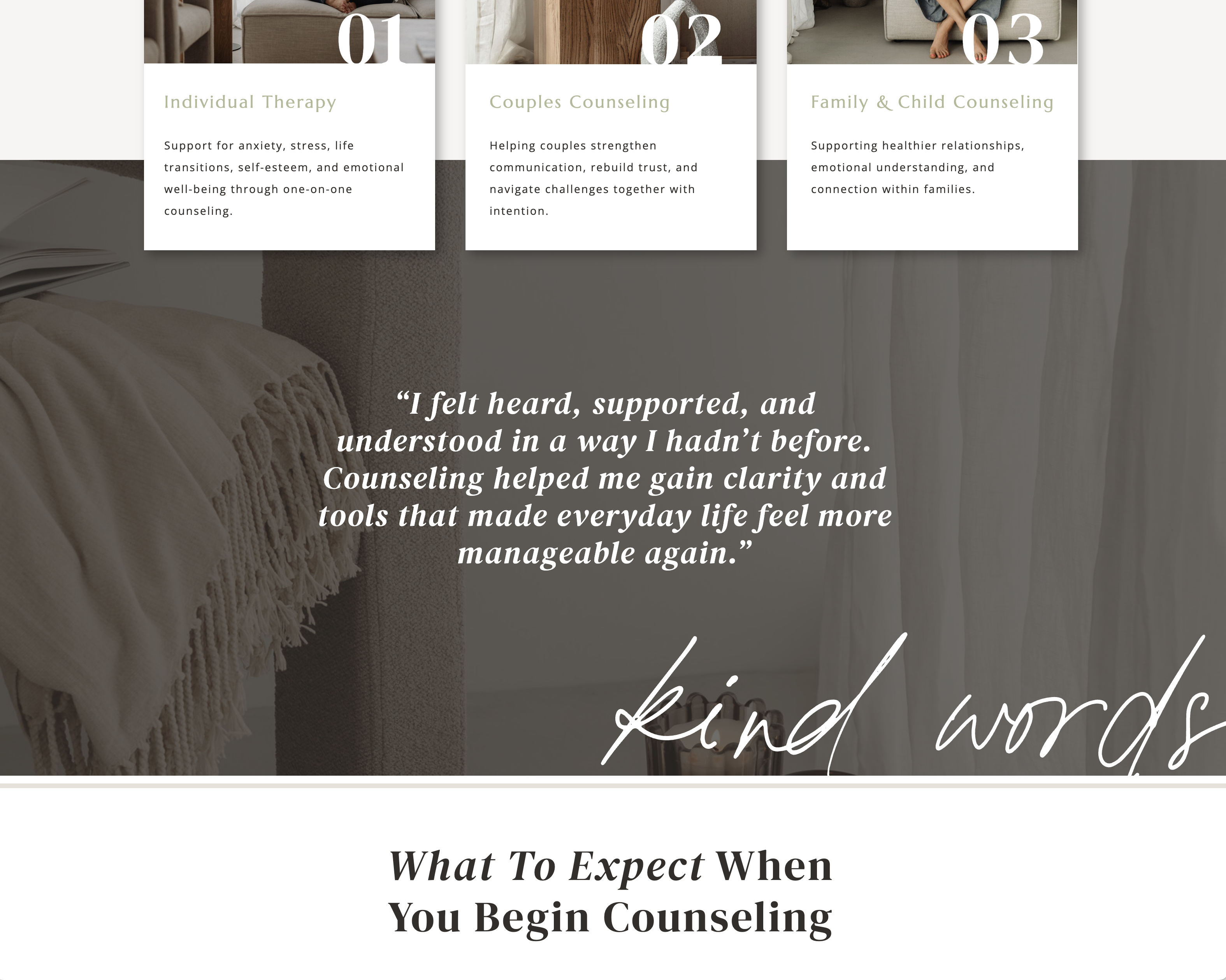
4. Services That Are Easy to Understand
One of the most common mistakes in service-based website design is overcomplicating the offer. Long service pages with fifteen options, three tiers of packages, endless bullet points, and fine print that requires a second read — it creates decision fatigue, and decision fatigue leads to people clicking away.
Strategic website design asks: what does my client actually need to know in order to say yes?
Usually the answer is simpler than we make it. They need to understand what the service is, who it’s for, roughly what’s involved, and what they’ll have at the end. Pricing context (even a starting point) helps too, because it sets expectations and filters out the wrong fits before they book a call.
If you offer multiple services, organize them in a way that makes the decision easy — by client type, by outcome, or by stage of business. The goal is for someone to read your services page and think “yes, that’s exactly what I need” — not “I’ll have to email to figure out which one applies to me.”
Fewer options, presented clearly, will always outperform a comprehensive list that nobody reads all the way through.
5. Messaging That Keeps Your Client at the Center
This is the component that ties everything else together — and the one that’s hardest to self-edit, because we’re all too close to our own businesses to see it clearly.
Strategic website design puts the client at the center of the story, not the business owner. Your website isn’t primarily about your background, your philosophy, or your process — it’s about your visitor’s problem and how you help them solve it. Your story and your credibility matter, but they work best when they’re framed in service of the client’s outcome.
A simple test: read through your homepage and count how many times you use the word “I” versus “you.” If “I” is winning by a significant margin, the messaging is probably more about you than about your reader.
This doesn’t mean erasing your personality — it means directing it outward. Your voice, your values, your approach — all of that can come through clearly while still keeping the reader’s needs at the center of every page.
When the messaging is right, a visitor lands on your site and feels immediately understood. That feeling of “she gets exactly what I’m dealing with” is what turns a browser into an inquiry.
Putting It Together
Strategic website design isn’t a one-time project — it’s a standard to hold your site to as your business evolves. A tagline that worked two years ago might not reflect who you serve now. A services page that made sense when you had three offerings might need rethinking now that you’ve refined your focus.
The good news is you don’t have to overhaul everything at once. Work through these five components one at a time and you’ll end up with a site that’s not just well-designed, but genuinely working for your business.
If you’re looking for a starting point that already has the strategic structure built in, the templates in the shop are designed with these principles in mind — clear layouts, intentional hierarchy, and room for your content to do its job.